How It Works
Understand how LAVO hydrogen energy systems work.
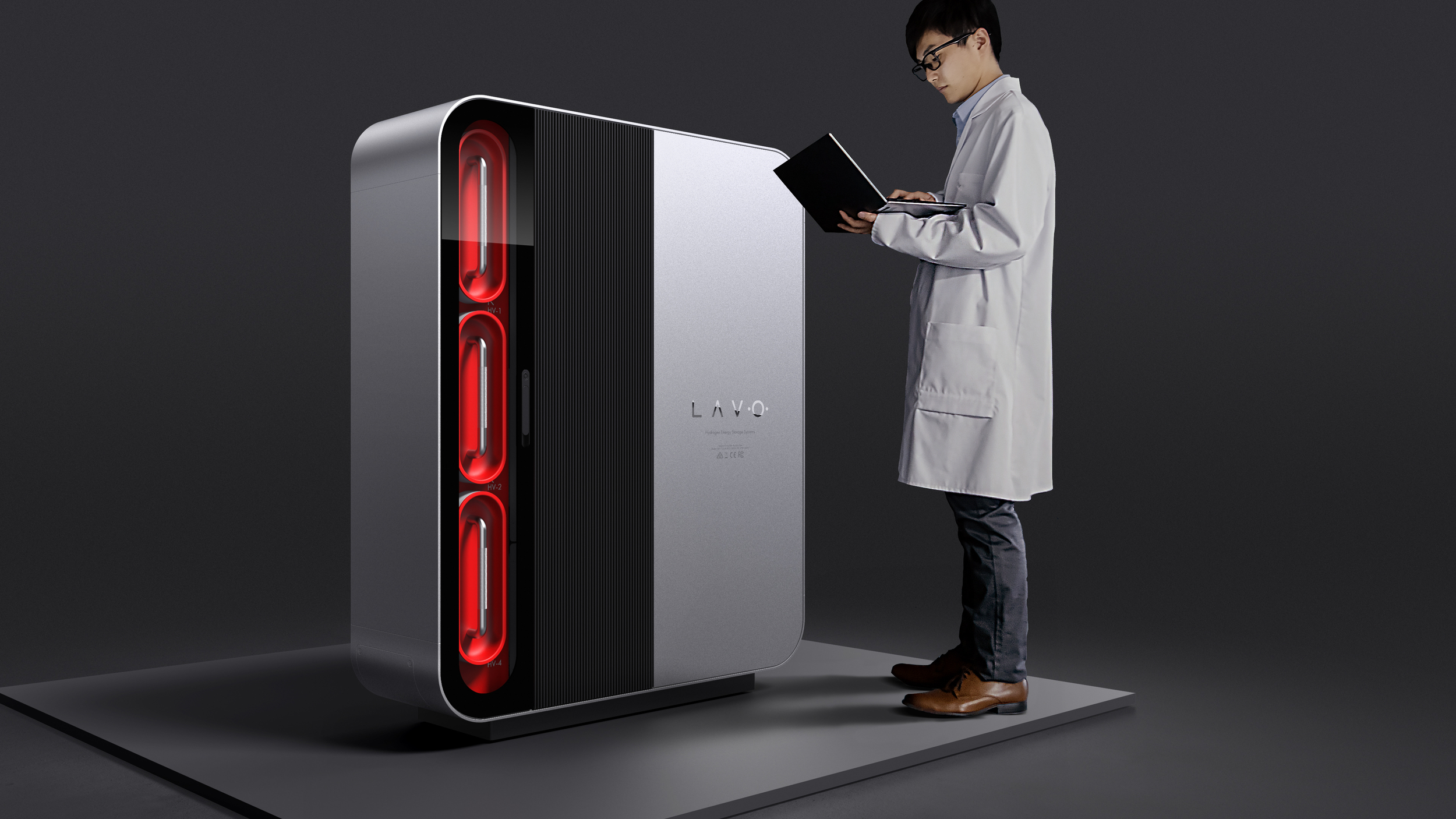
From Solar to Storage to Supply
LAVO’s hydrogen energy system takes the challenge of renewable energy — that it’s not always available when you need it — and solves it with a closed-loop process. When your solar panels produce more electricity than you can use, that excess energy powers an electrolysis unit which splits ordinary water into hydrogen and oxygen. The oxygen is simply released, while the hydrogen is captured and stored. Instead of using large, pressurised tanks, the hydrogen is safely absorbed into solid-state metal hydride storage, which makes it stable, compact, and ready for long-term use. In essence, the system is bottling the sun’s energy in the form of hydrogen, holding onto it until it’s required.
When power demand rises — whether at night, during cloudy days, or at peak times — the stored hydrogen is released into a fuel cell, where it reacts with oxygen from the air to generate electricity. This process is completely clean, producing only water vapour as a by-product, which can be reused in the cycle. The result is reliable, efficient electricity on demand, seamlessly complementing solar and other renewables. By turning surplus energy into hydrogen and then back into power, LAVO creates a sustainable energy loop that’s safe, emission-free, and built for real-world use.
The Hydrogen Energy Process
LAVO’s hydrogen energy system captures excess renewable energy, stores it safely, and delivers clean electricity whenever it’s needed. By turning surplus solar power into hydrogen and later converting it back into electricity, the system provides a reliable, emission-free energy supply that works around the clock.
Generation – Electrolysis
Excess solar energy powers an electrolysis unit that splits water into hydrogen and oxygen. The oxygen is released into the air, while the hydrogen is captured for storage.
Storage – Safe Storage
Hydrogen is securely held in solid-state metal hydride tanks. This makes it stable and safe for long-term storage, without the need for high pressures or extreme cooling.
Conversion – Power Generation
When electricity is needed, the stored hydrogen is sent through a fuel cell. Here, it combines with oxygen from the air to generate clean power, with water as the only by-product.
Output – Clean Power
The system delivers reliable, efficient electricity on demand. With only water vapour produced, it’s a completely emission-free energy cycle designed for everyday use.
See the science behind reliable, emission-free energy supply that works around the clock.

Learn more